Things to consider when redesigning your website

.DP39aI-h_1yaMND.webp)
A website redesign is a great opportunity to address everything you didn’t like about your old site. Whether it’s the appearance, the technology powering it, or the editorial workflow, the end goal should be a website that outperforms the old one in measurable metrics.
Companies usually redesign for a mix of reasons:
- the website is old and lacks modern features like accessibility
- the technology stack is outdated and underperforming
- the CMS is outdated and hard to use
- the site can’t keep up with the demands of the content or marketing team as the business grows
- rebranding or acquisition
It’s often a few of these at once. Whatever the reason, redesigning a website is a complex process. Here are 7 things that should be part of your strategy.
1. Preserve the hard-earned authority of your domain
Your old site’s pages are probably referenced all over the web, posted on social media and various forums. You need to make sure the new site handles those by redirecting old pages to their new equivalents.
The more restructuring you do, like adding new taxonomies or categories, the more complex your redirect strategy needs to be.
For example, if you had oldsite.com/x-case-study and now you have newsite.com/resources/case-studies/x, the old URL needs to redirect to the new one so neither users nor search engines are impacted.

2. Build a custom 404 page
Old pages that don’t have an equivalent on the new site (maybe they were removed or merged into other pages) can be omitted.
A common SEO trick is to redirect missing pages to the homepage. This is a bad practice. Both users and search engines are confused by it, it’s usually not what they were looking for. If SEO scanners report 404s, there are two options:
- If you have control over the content, edit it and remove the dead link
- If you don’t (it was posted by someone on a forum), no action is needed, it’ll end up in the internet’s graveyard anyway
A custom 404 page should inform the user that the resource is no longer available and provide navigation to explore other parts of your site. If your site is content-rich, you can also provide a search.

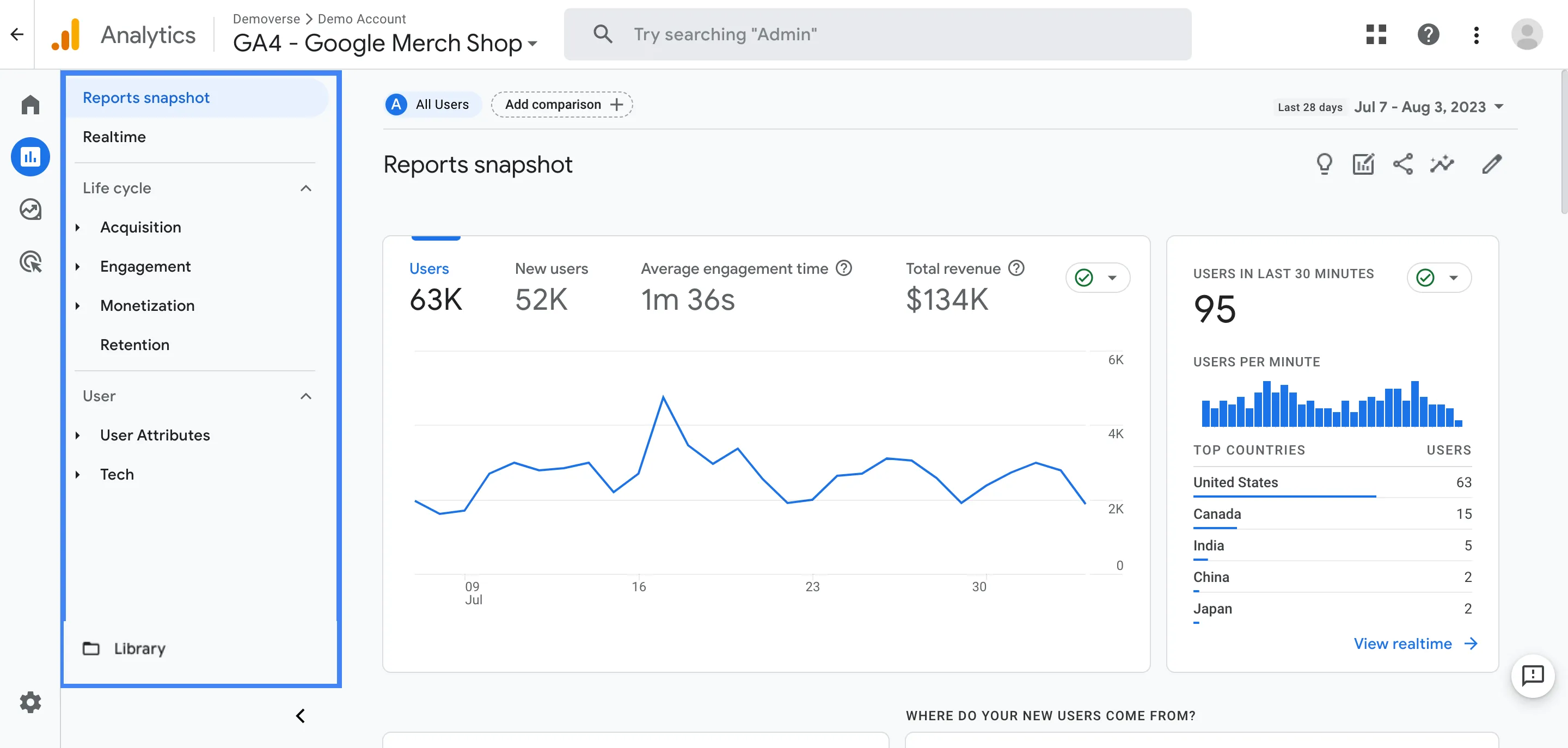
3. Ensure analytics data is collected on a single account
The old and new sites need to be linked to the same Google Analytics account so you can compare metrics. You can use tools like Looker Studio to create reports that focus on high-value pages and metrics that make sense for your business.
To streamline the transition, you can have two separate Google Tag Manager containers that feed the same Analytics account with an identifier for each event, so you can tell old site events from new site events.
This is not a hard rule, you can merge or connect data from multiple accounts, but that introduces unnecessary complexity.
4. Benchmark your old site’s performance metrics
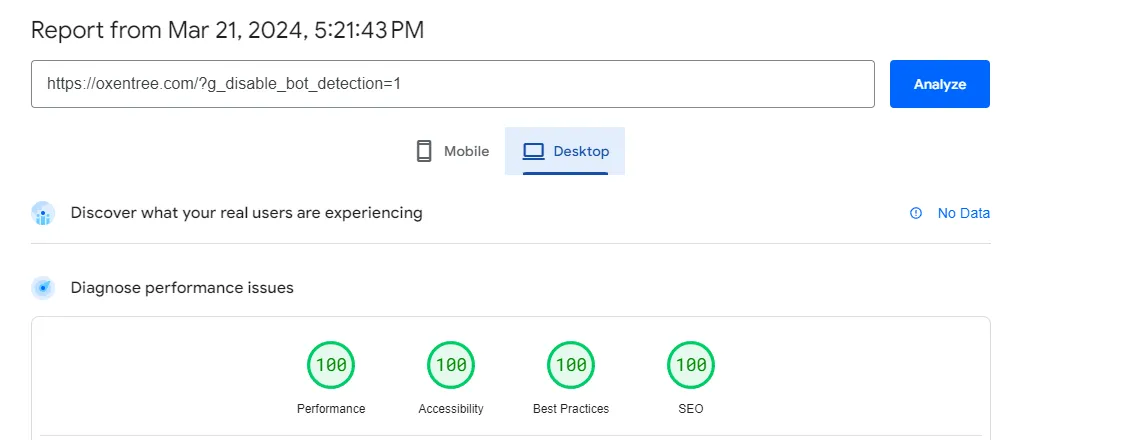
Use tools like PageSpeed Insights to benchmark your current performance so you have a baseline to compare against.
Performance matters. User and search engine expectations are high, and a redesign that makes the site slower is a step backwards.
5. Prepare for a slight drop in organic traffic
A redesign will negatively impact your SEO in the short term. Search engines need time to reassess your website after significant changes.
The drop can be as high as 20%, but it typically recovers within 1-2 months after launch. To reduce the impact, compile a list of your highest-ranking pages and avoid aggressive content changes on those.

6. Consider gradual adoption
If your website has a lot of content, consider a phased approach. Redesign some pages without immediately deprecating the old site.
A phased approach is easier for everyone to digest, the stakeholders, the marketing team, search engines. You can also allow users to opt in and use the redesigned site only if they want to, similar to how applications like Instagram roll out new features to a subset of their users first.

7. Find the right partner
Redesigning a website is an intimidating process. Stakeholders question the cost, the marketing team worries about the learning curve, and developers question the quality of the execution.
That’s normal. The intimidation usually comes from unpredictability, and if not done right, a redesign can have the opposite effect of what you set out to achieve. Finding someone who’s done this before and can coordinate everything, the redirects, the analytics, the performance benchmarks, the phased rollout, makes a real difference in the outcome.