Things to consider when redesigning your website

.DP39aI-h_1yaMND.webp)
A redesign changes how users navigate your site, how search engines understand it, and how every team measures success. Treat it like a migration, not a visual refresh.
Companies usually redesign for a mix of reasons: the site is old and lacks modern features like accessibility, the technology stack is underperforming, the CMS is painful for the content team, or the business has outgrown the site’s structure. It’s often a few of these at once. The real complexity isn’t the new design. It’s everything that depends on the old structure.
URLs are part of your public API
Your old site’s pages are referenced all over the web, posted on social media, linked from forums, indexed by search engines. Changing URLs without redirects breaks those links in the same way a schema change breaks dependent services.
The more restructuring you do (new taxonomies, new categories, new URL patterns), the more complex your redirect strategy needs to be. If you had oldsite.com/x-case-study and now you have newsite.com/resources/case-studies/x, the old URL needs to redirect to the new one so neither users nor search engines are impacted.
A common SEO trick is to redirect missing pages to the homepage. This is a bad practice. Both users and search engines are confused by it, it’s usually not what they were looking for. For pages that don’t have an equivalent on the new site, let them 404. A custom 404 page is part of your recovery strategy when migrations aren’t perfect: inform the user that the resource is no longer available, provide navigation to explore other parts of your site, and if your site is content-rich, offer a search.

Search engines re-evaluate everything
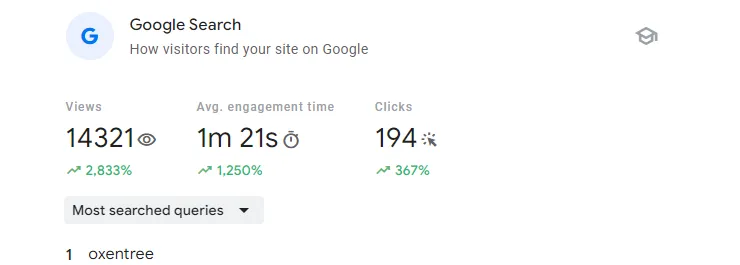
A redesign will negatively impact your SEO in the short term. Search engines need time to reassess your website after significant changes. The drop can be as high as 20%, but it typically recovers within 1-2 months after launch.
To reduce the impact, compile a list of your highest-ranking pages and avoid aggressive content changes on those. The redirects from the first section protect your authority, but even with perfect redirects, search engines re-evaluate the structure and that takes time. Expect it, plan for it, and don’t panic when the numbers dip.

Without a baseline, improvement is a guess
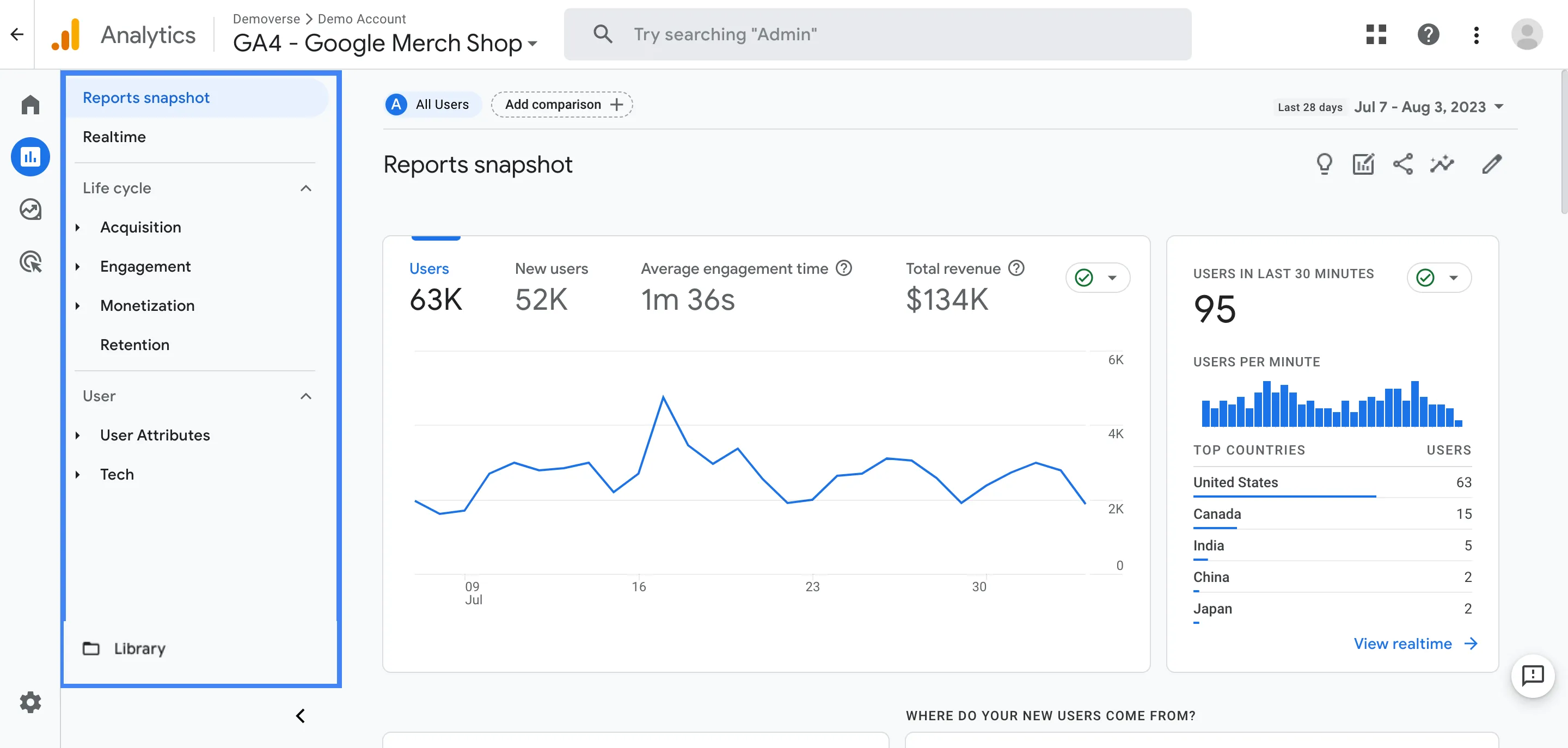
The old and new sites need to feed the same analytics account. If you can’t compare metrics across the transition, you can’t tell whether the redesign actually improved anything. It becomes a subjective improvement instead of a measurable one.
You can use tools like Looker Studio to create reports that focus on high-value pages and metrics that make sense for your business. To streamline the transition, have two separate Google Tag Manager containers that feed the same Analytics account with an identifier for each event, so you can tell old site events from new site events.
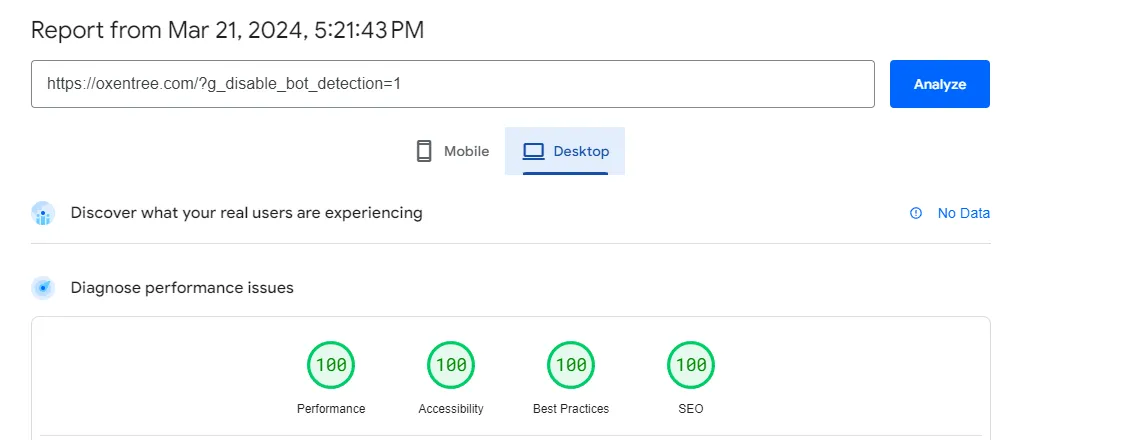
Use tools like PageSpeed Insights to benchmark your current performance before you start. Without a baseline, you’re guessing whether the new site is faster or slower. A redesign that makes the site slower is a step backwards, and you won’t know unless you measured what “before” looked like.
Roll out in phases, not all at once
If your website has a lot of content, don’t launch everything at once. Redesign some pages without immediately deprecating the old site. A phased rollout turns a structural migration into a series of reversible changes.
A phased approach is easier for everyone to digest: stakeholders, the marketing team, search engines. You can also allow users to opt in and use the redesigned site only if they want to, similar to how applications like Instagram roll out new features to a subset of their users first.

A redesign is an organisational change
A redesign is not a frontend task:
- Engineering changes URLs and page structure
- Marketing changes funnels and conversion paths
- Support updates documentation and onboarding flows
- SEO updates indexing assumptions and redirect maps
- Analytics resets baselines and reconfigures tracking
The intimidation usually comes from unpredictability. Each of those teams has assumptions about how the current site works, and a redesign invalidates some of those assumptions. The teams that handle redesigns well aren’t the ones with the best design, they’re the ones that coordinate the migration across all of these surfaces at once.